A Letter to the Sea, submitted by Noreen Raza, for 14th August 2026
Dear Sea, I Am Writing to You from the Land
Dear Sea,
For most of my professional life, I have worked on land.
Among forests.
Among trees and wildlife.
Among communities.
Around rivers, environmental concerns and the many questions that arise when people and nature share the same resources.
Yet, over the years, my journey on land has taught me that I have never really been far from you.
My first lessons came from forests.
I remember my training in Shinkiari (Mansehra) , when I saw a watershed for the first time. I still remember the water running down from the hills—clear, cold and pure. There was something deeply peaceful about it.
At that moment, I was not thinking about environmental indicators, policies or technical assessments.
I was simply looking at water.
Living water.
Water that had travelled through the hills and was beginning its journey towards somewhere beyond what I could see.
That memory has stayed with me.
Years later, I witnessed something very different.
I saw industrial effluent entering a waterway, and I saw fish floating lifeless on the surface.
That sight touched me deeply.
It was difficult to look at those fish and think of pollution only as a technical issue. In that moment, the consequences were no longer numbers, measurements or terminology.
They were visible.
They were alive a moment before.
And then they were not.
Those two memories—the clear, cold water of Shinkiari and the lifeless fish on polluted water— remain very different pictures in my mind. Together, they taught me something I have never forgotten: Water remembers what we do to it.
And eventually, much of that water finds its way to you.
The journey from the hills to the sea is not a straight line on a map. It is a living connection.
Water moves through forests, streams, rivers, wetlands and communities. The Indus carries the story of an enormous landscape towards Sindh and ultimately towards the coast.
What happens along that journey matters.
A healthy landscape can send life downstream.
Careless choices can send pollution downstream.
And both journeys eventually meet the sea.
That is why, when I think about you now, I cannot see you as something separate from Pakistan’s land.
You are connected to our forests.
Connected to our rivers.
Connected to our cities.
Connected to our communities.
Connected even to choices made by people who may live hundreds of kilometres from your shore.
Along the coast of Sindh, the mangroves remind us of this connection. They stand quietly where land meets water. They provide habitat, support biodiversity, help protect coastal areas and contribute to the livelihoods and resilience of coastal communities.
They may not attract the same attention as a forest or a mountain, but they are part of Pakistan’s living heritage.
And perhaps that is one of nature’s greatest lessons: what looks small can be enormously important.
My professional journey has also changed the way I think about development. I have learned that protecting the environment is not about stopping progress. It is about making progress thoughtful enough to last.
An environmental assessment should make us think beyond the moment when a decision is made. A project should be considered not only for what it creates today, but also for what it may mean for water, biodiversity, communities and climate resilience tomorrow. Waste should not simply be moved from one place to another and forgotten. Water should not be treated as though it has nowhere else to go.
And development should not be measured only by what we build, but also by what we preserve.
These are not responsibilities belonging to one institution or one profession.
They belong to all of us.
Government has a role.
Industry has a role.
Communities have a role.
Professionals have a role.
And ordinary citizens have a role.
Because there is no real place called “away.”
The waste we throw away goes somewhere.
The water we contaminate continues somewhere.
The resources we consume come from somewhere.
And eventually, our choices become part of nature’s story.
Sometimes that story reaches you.
Dear Sea,
Perhaps that is why I no longer see you only as a beautiful horizon.
I see you as a reflection.
You reflect what comes from our land.
You receive the rivers.
You support communities.
You shelter countless forms of life.
You absorb the pressures created by our changing climate and our growing demands.
And yet, despite everything, you continue to give.
You give food.
You give livelihoods.
You give beauty.
You give us a coastline that forms part of our national identity.
Perhaps we have spent too much time asking what the sea can give us. It is time to ask another question:
What are we giving back?
This question feels especially meaningful on 14 August. Independence is about a country we inherited through the sacrifices of previous generations.
But every generation becomes a temporary custodian of that country.
We receive it.
We live in it.
We develop it.
And eventually, we hand it over.
So what will we hand over?
I hope we hand over rivers where children can still see life in the water. I hope we hand over forests that still breathe.
Mangroves that still stand. Coastal communities that remain resilient. Beaches that are worthy of our pride.
And seas where marine life can continue to exist beyond our photographs.
I hope another generation can experience what I experienced in Shinkiari—the simple wonder of clear, cold water running down from the hills. I hope they never consider dead fish floating on polluted water to be normal.
Most of all, I hope they understand that environmental protection is not a separate concern from the future of Pakistan.
It is part of that future. We can develop. We can create opportunities. We can grow our economy. We can build stronger communities.
But we can also choose to do these things with respect for the natural systems that sustain us.
That is the Pakistan I want to believe in. A Pakistan where development and nature are not treated as opposing forces.
A Pakistan where environmental responsibility becomes part of everyday life. A Pakistan where the value of a river is not understood only when it is polluted. Where the value of a forest is not understood only after it disappears. Where the value of a mangrove is not understood only after the coastline becomes vulnerable. And where the value of the sea is not understood only when marine life is already in danger.
Dear Sea,
I began this letter with a memory from the hills.
Perhaps that is where I should end it too.
I remember that cold, clear water moving quietly through the Shinkiari landscape.
I did not know where every drop would eventually travel.
But today, after years of working with nature, I understand something I did not understand then:
Every drop is part of a larger story.
So, are our choices.
A choice made on land can affect a river.
A river can affect a delta.
A delta can affect the sea.
And the sea can affect generations we will never meet.
That is why I do not want to speak to you only with admiration. I want to speak with responsibility. On this Independence Day, my hope is that we learn to see Pakistan as one connected living system.
Our mountains.
Our forests.
Our rivers.
Our wetlands.
Our delta.
Our mangroves.
Our coast.
Our sea.
And the people and wildlife who depend upon them.
Dear Sea,
you are not simply where our land ends.
You are part of where Pakistan’s story continues.
May we have the wisdom to protect that story.
May we have the courage to change what needs changing.
And may we leave behind a Pakistan whose natural beauty is not merely remembered – but still alive.
With hope for Pakistan,
Noreen Raza
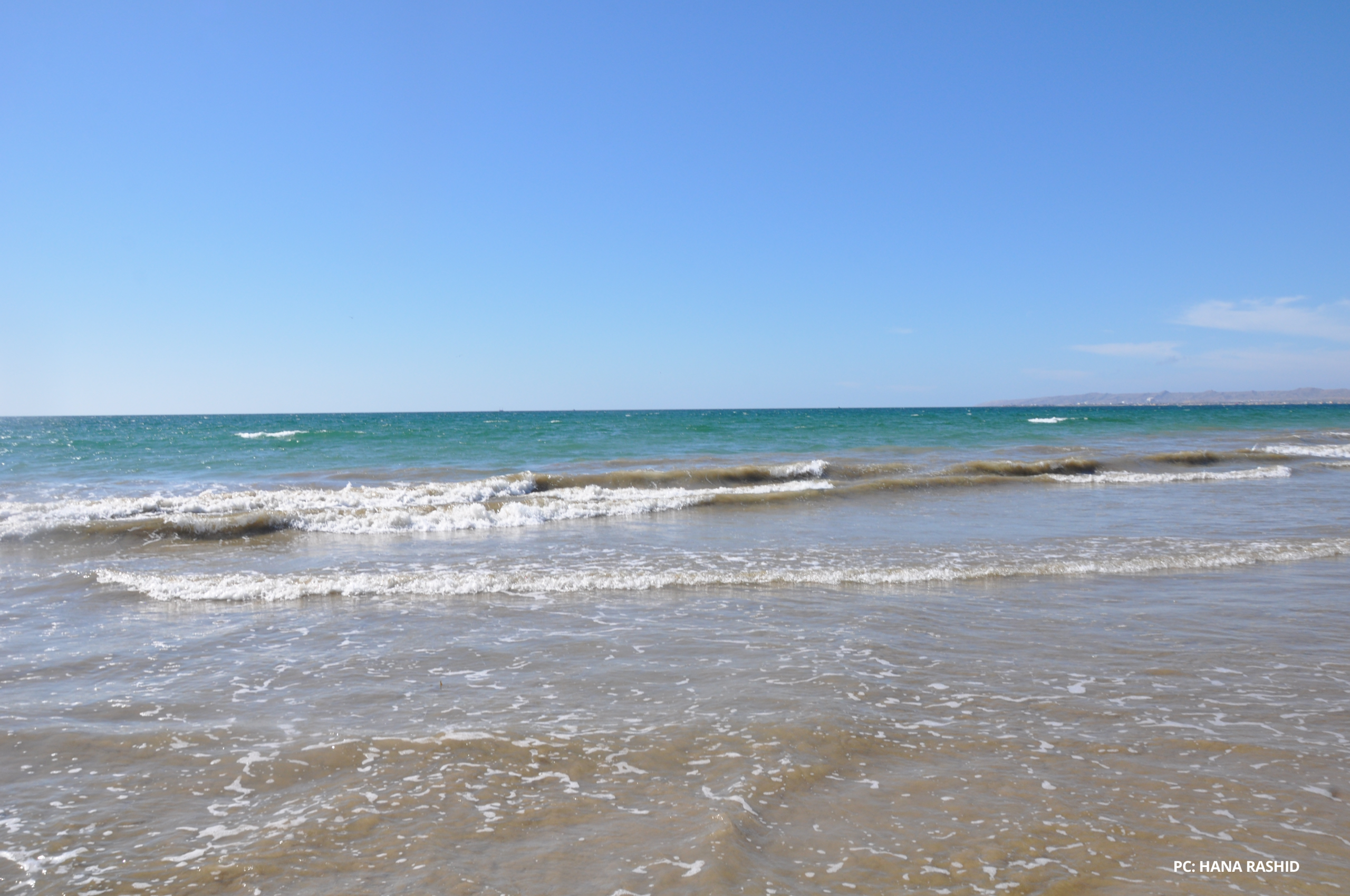
Header Photo: Hana Rashid
Comments are closed